Todos os estudos de caso
O Grupo ERA ajuda a Catholic Charities of Denver a reinvestir milhões na sua missão


Catholic Charities of Denver shelters, feeds, houses, educates, counsels, and provides emergency assistance and critical services to people in Northern Colorado. As one of the largest of Catholic Charities’ 167 chapters across the United States, Catholic Charities of Denver’s work focuses on a wide spectrum of ministries: including affordable housing; early childhood education; as well as shelter, women, senior, family, kinship, parish, community, and counseling services.
Ao longo do último ano, a CCD prestou assistência a mais de 53 000 pessoas, proporcionou mais de 125 000 noites de alojamento e serviu 400 000 refeições. A organização opera com um orçamento anual de 60 milhões de dólares e cerca de 600 funcionários.
A falta de recursos humanos internos centralizados e de práticas de aquisição externas impediu a CCD de expandir os serviços, consolidar fornecedores, aumentar a eficiência — e poupar dinheiro.
O departamento de habitação da CCD (Archdiocesan Housing, Inc. («AHI»)) é responsável por cerca de metade de todos os serviços que a organização presta anualmente. A AHI conta com 30 propriedades, com 1 700 unidades, que acolhem cerca de 3 500 residentes. A gestão das instalações é uma das principais despesas do departamento e envolve muitos recursos internos, incluindo técnicos de manutenção, zeladores, guardas, pessoal de limpeza e outros. A organização também recorre a várias centenas de prestadores de serviços externos para serviços de manutenção relacionados com as propriedades.
Like many nonprofits, CCD operates without a centralized procurement function that looks across the entirety of the organization and see where scale, vendor consolidation, and buying power could be employed to save money and increase efficiency and services. CFO Phil Vottiero knew Catholic Charities of Denver would benefit from such a function, but he realized it might need to come from outside the organization.

A ERA criou um modelo híbrido de gestão de instalações internas para supervisionar os fornecedores e o pessoal interno, mantendo simultaneamente padrões de serviço rigorosos.
In late 2020, Vottiero brought in ERA Group. ERA Group's charge was to look at the totality of agency spending and create different workflows allowing CCD to evaluate its spending across many areas, with housing chief among them.
“To have an expert such as ERA come in and be that independent viewpoint, that separate review, allowed us to take a look at how spending was being done and where we were missing opportunities—something we would never have been able to achieve on our own,” says Phil Votterio.
O Grupo ERA concluiu que a redução das despesas com fornecedores externos era apenas uma parte da oportunidade. Além de elaborar um plano para uma melhor gestão dos fornecedores, decidiram analisar a força de trabalho interna da CCD para obter um impacto significativo.
A CCD estava totalmente empenhada em tratar bem os seus colaboradores, pelo que a subcontratação a terceiros nunca foi uma opção. A empresa também estava convicta de que o elevado nível de serviço a que os seus residentes estavam habituados tinha de se manter.
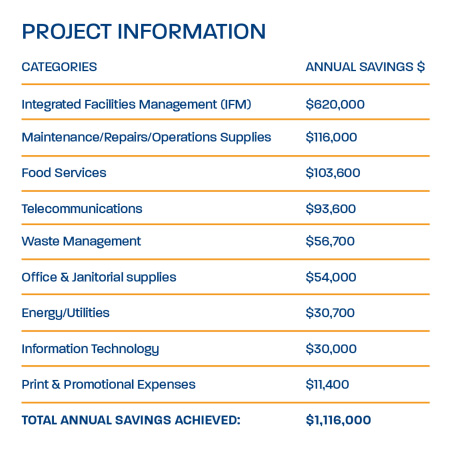
A ERA concebeu um modelo híbrido para a organização — um «projeto de instalações integradas» — através do qual a utilização dos funcionários seria maximizada em toda a agência e a gestão dos fornecedores seria centralizada num gestor de instalações integradas («IFM») externo. Nenhum funcionário seria despedido ou transferido.
As turnover occurs – the IFM – in coordination with CCD will evaluate the position and determines whether such a role needs to be replaced or simply supplemented with service hours provided by the IFM. This long-range plan honored all the organization’s commitments to staff while allowing for a much more efficient and cost-effective model over time.
A ERA ajudou a recrutar o gestor de instalações integrado ideal para tratar de todas as operações de manutenção diárias, tanto com os colaboradores como com os fornecedores, e para gerir projetos de despesas de capital.
“It is an evolving savings program because we’ve got a dynamic component —people—that we’re trying to recalibrate so we can start to achieve some of these greater savings," says Vottiero. "ERA has been looking at this in a unique way. We’re seeing how there’s an efficiency gain to be had, as well as how repositioning job responsibilities and being able to look across properties and business entities can recast the picture. I’d never been able to do that before.”

A CCD está em condições de alcançar a máxima eficiência e uma poupança superior a 30% ao ano apenas no Ministério da Habitação, o que a levou a solicitar à ERA que alargasse a sua presença a toda a organização.
A pedido de Vottiero, a ERA criou um programa global destinado a abranger todos os ministérios, com o objetivo de gerar poupanças e ganhos de eficiência.
“If we do not steward what we are given judiciously, beyond wasting money, resources and energy, we are running counter to what we’re called to do, which is to take what we’re given and utilize it at its maximum efficiency,” says Vottiero.
Cada dólar que a CCD poupa permite-lhe ajudar mais pessoas necessitadas em todos os seus ministérios. Só com o projeto de instalações integradas, a Catholic Charities of Denver está em condições de poupar mais de 30 milhões de dólares ao longo de 10 anos.
“ERA is a partner, not a vendor,” Vottiero says. “I can’t emphasize that enough. We’ve all worked with many consultants and contractors in our day, and there are more than many that create more work than they solve. What ERA did from the outset was to create a model that was easy to follow, did not burden any one individual or area, and allowed us to move forward across a wide array of projects.”
“ERA provided us a huge opportunity to further our mission by taking the resources we have been given and allowing us to redeploy savings into additional high-impact programming.”

"If we do not steward what we are given judiciously, beyond wasting money, resources and energy, we are running counter to what we’re called to do, which is to take what we’re given and utilize it at its maximum efficiency." [Phil Votterio, CFO of Catholic Charities of Denver]